


LANMASTER, U/UTP, Category 6, twisted-pair cable, 4-pair, unshielded, with separator, 305 m
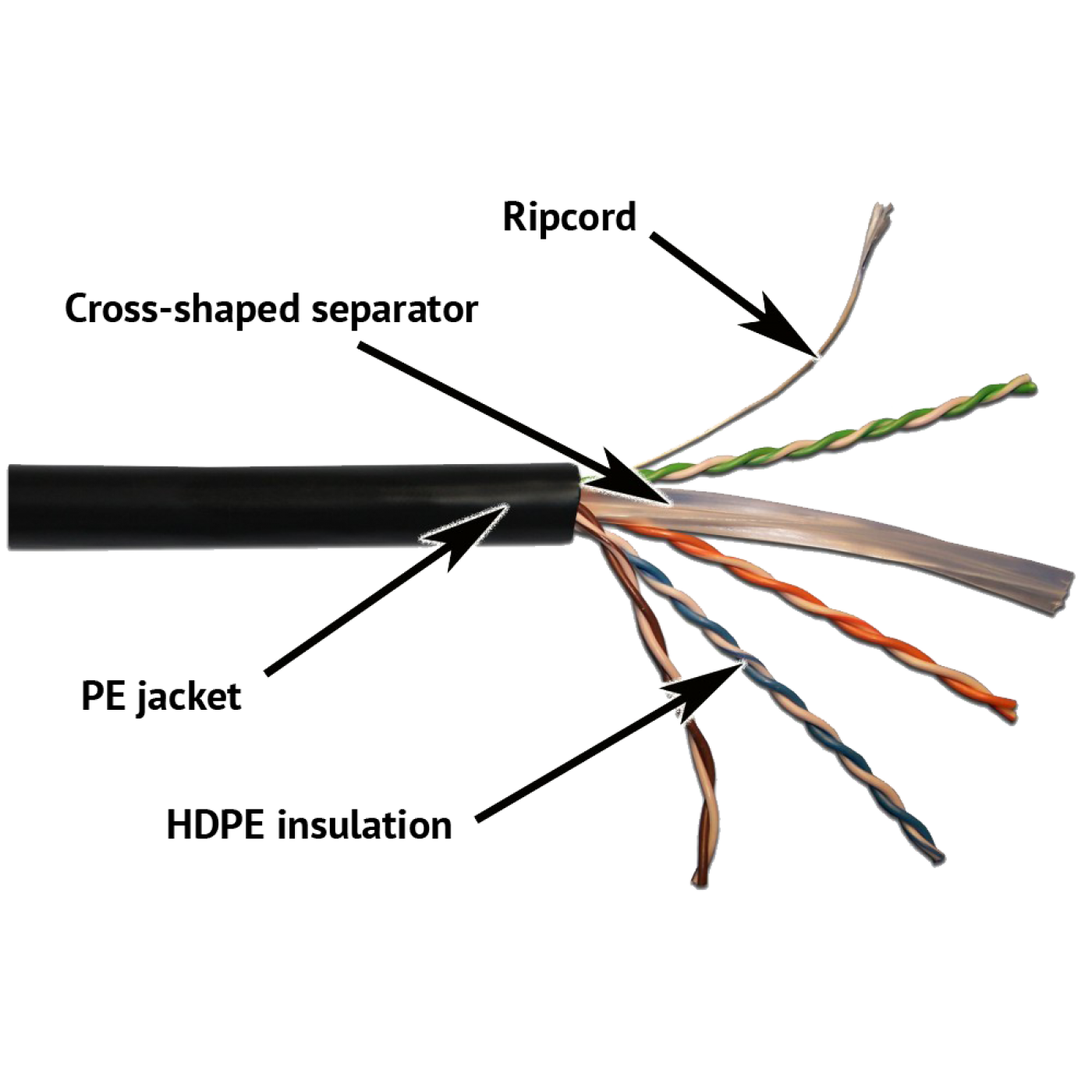
LANMASTER, U/UTP, Category 6, twisted-pair cable, 4-pair, unshielded, with separator, 305 m. Product for LANMASTER copper structured cabling systems. Use in lanmaster cables applications according to the project design and product specifications.
Most frequently asked questions and answers
What is the LAN-6EUTP-OUT cable used for?
LAN-6EUTP-OUT is a unshielded category 6 cable made of 4 pairs of solid copper conductors. The cable is used for horizontal cabling of a structured cabling system (SCS): from the cross-connect equipment in the telecommunications room to the work-area outlets, and for connecting IP cameras, wireless access points and other network equipment. The conductor size is 23 AWG.
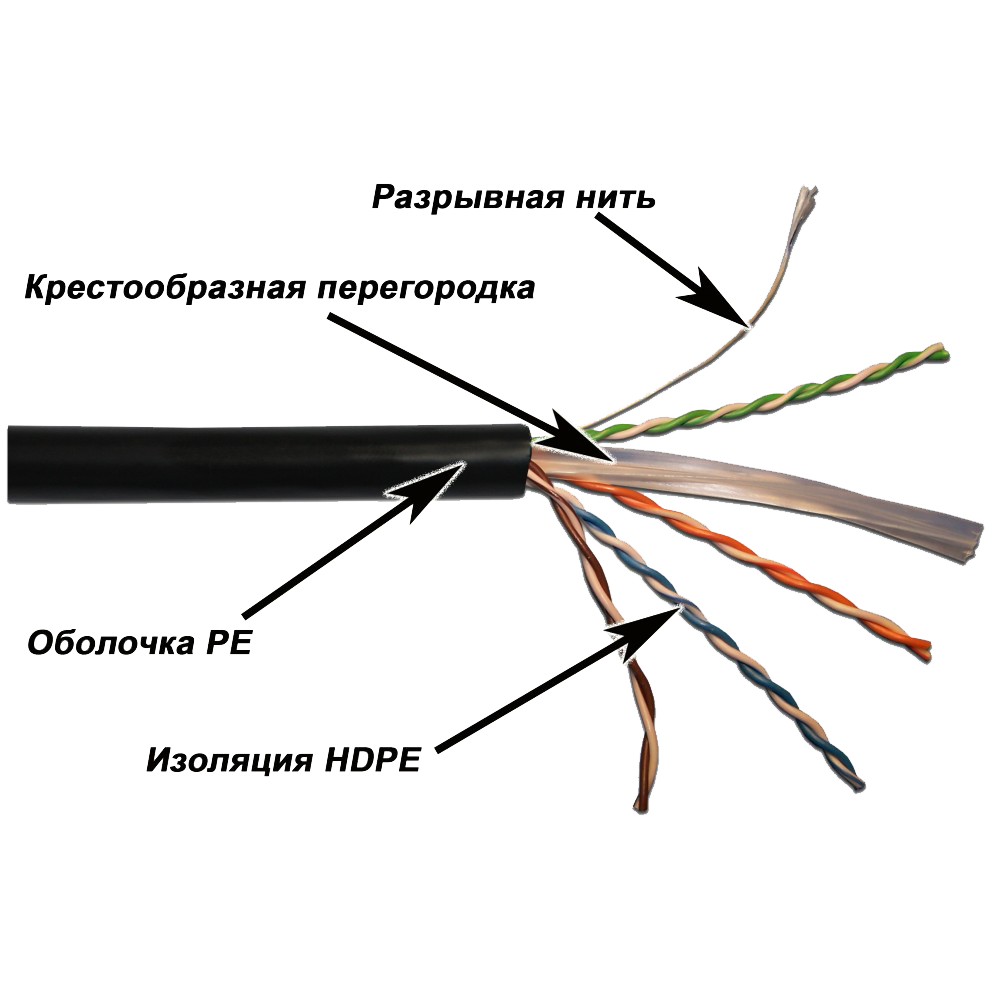
What is the LAN-6EUTP-OUT cable made of and what are its features?
Each conductor is insulated with high-density polyethylene (HDPE); two conductors are twisted into a pair, and all pairs are enclosed in a common sheath. The cable has an outdoor polyethylene (PE) sheath. The construction also includes: a cross-shaped separator between the pairs. The operating temperature range of the cable is up to +75 °C.
Which network and link length does the LAN-6EUTP-OUT cable support?
Category 6 is rated up to 250 MHz and Gigabit Ethernet; 10GBASE-T is possible only over a limited link length (up to 55 m in the standards, provided the conditions are met). For links up to 100 m, the ISO/IEC 11801 and TIA-568 standards allow a permanent link of up to 90 m plus patch cords totalling up to 10 m. Do not exceed these values, otherwise the link may run at a reduced speed or with errors.
Which cable category should I choose: 5e, 6 or 6A?
Category 5e or 6 is enough for Gigabit Ethernet at work areas. Choose category 6A if 10 Gbit/s (10GBASE-T) is required over the whole link length, and category 6 if you need extra headroom in frequency performance. All components of the link (cable, outlets, patch panels, patch cords) must be of the same or a higher category: the link performance is determined by its weakest element.
When do I need a screened cable (FTP) instead of an unshielded one (UTP)?
An unshielded cable (UTP) suits most office links. A cable with an overall foil screen (FTP) is the choice near powerful electrical equipment, in industrial premises and along power lines when the separation distance cannot be kept. A shielded link works only with shielded outlets, patch panels and patch cords and with correct grounding, so without grounding choose an unshielded solution.
Can the LAN-6EUTP-OUT cable be installed outdoors and inside a building?
The cable is intended for outdoor installation: the polyethylene sheath protects the conductors from external influences and sunlight. Inside a building, route only the entry section and connect the cable to a cross-connect or an outlet; for indoor installation use a cable with a PVC (polyvinyl chloride) or LSZH (low smoke zero halogen) sheath that meets the fire-safety requirements of the site. When installing in the ground, place the cable in a protective duct. The operating temperature range of the cable is up to +75 °C.
Can the LAN-6EUTP-OUT cable be used for Power over Ethernet (PoE)?
The cable conductors are copper, so the link is suitable for Power over Ethernet (PoE). At PoE++ power levels, cables heat up in dense bundles, so in such cases choose a cable of a higher category with larger conductors and avoid very tight bundles.
How do I terminate the LAN-6EUTP-OUT cable in an outlet or patch panel?
Strip the outer sheath over the minimum length without damaging the conductor insulation. Untwist the pairs only as far as needed for termination and arrange the conductors according to the colour scheme on the module or panel (T568B or T568A, identical along the whole link). Punch the conductors down with a punch-down tool for 110 or Krone contacts and trim the excess. Do not terminate with a screwdriver: it damages the contacts and the insulation.
Can a patch cord be made from the LAN-6EUTP-OUT cable?
For patch cords that are bent and switched frequently, use ready-made patch cords or a cable with stranded conductors. The solid conductors of this cable break when bent repeatedly. If you need a short piece for a one-off temporary link, use RJ-45 connectors designed for solid conductors and a crimping tool.
How do I install the LAN-6EUTP-OUT cable correctly?
Unwind the cable without loops or kinks and do not exceed the permitted pulling force. Observe the minimum bend radius and do not tighten cable ties so that the sheath is crushed. Do not run the cable close to and in parallel with power lines; cross them at an angle close to 90°. Leave a service loop at the outlet and in the cabinet.
How do I unwind the LAN-6EUTP-OUT cable from its package and how do I store it?
Pull the cable from the centre of the box without forming loops or figure-eights and hold the box in place. Store the cable in a dry room in its factory packaging and protect the cable ends from moisture and contamination.
Why does a link on the LAN-6EUTP-OUT cable run at 100 Mbit/s instead of 1 Gbit/s?
Typical causes are an excessive length, poor termination of the conductors, damage to a pair inside the cable (crushing, kink, impact), components of a lower category, or a wrong conductor order in the connector. Check the link with a tester: a simple continuity test does not reveal degraded parameters. Redo the termination at the problem end and replace the damaged cable section.
Package dimensions and weight
Single item
| Unit | length × width × height (mm) | Weight (kg) | Volume (m3) |
|---|---|---|---|
| box | 390 × 270 × 390 | 12.6 | 0.041067 |
Product Codes (1)
-
LANMASTER, U/UTP, Category 6, twisted-pair cable, 4-pair, unshielded, with separator, 305 m