


TWT optical patch cord, PVC, FC/PC-SC/PC, MM
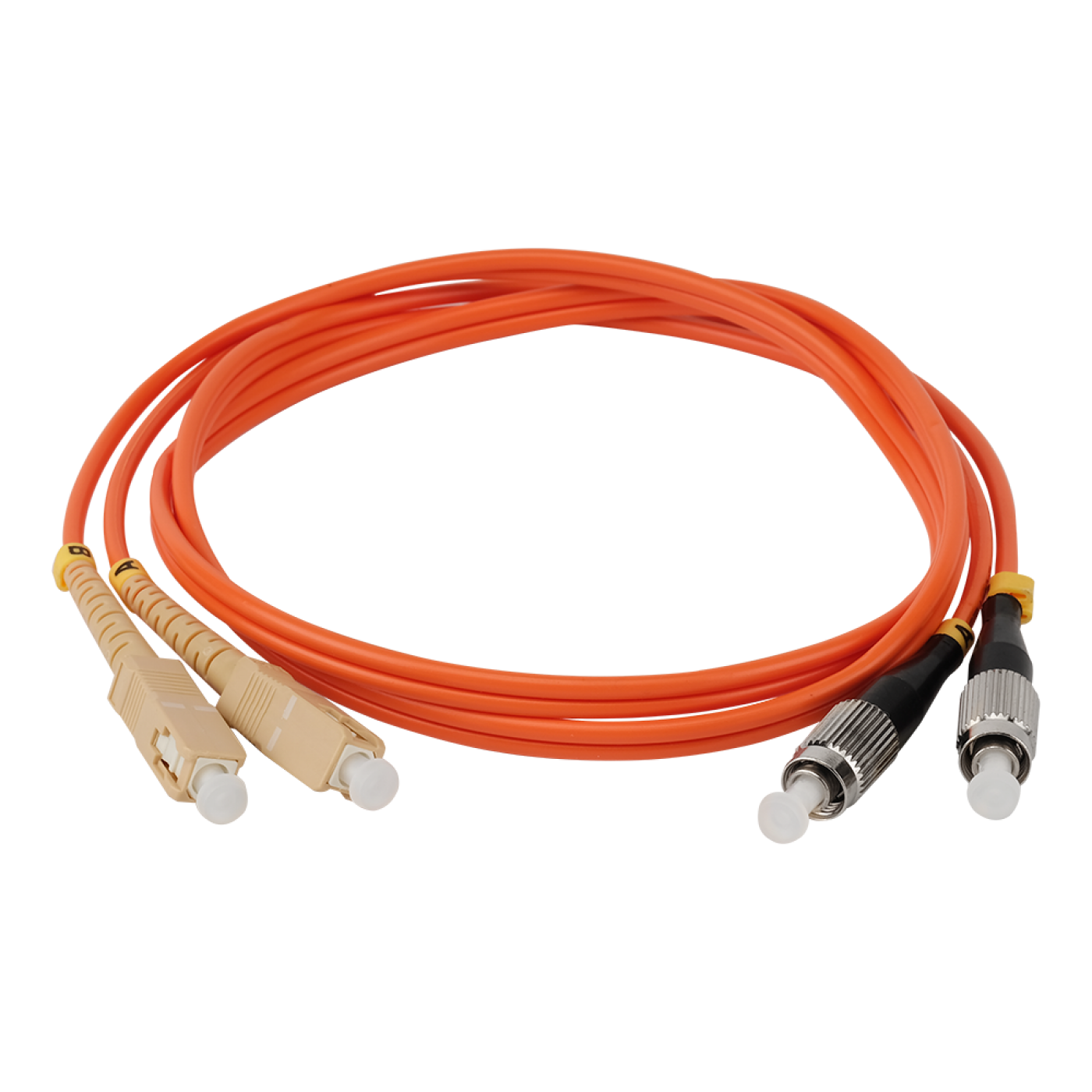
The patch cord is a piece of optical cable 50/125 with optical FC connector at one end and SC at another end.
TWT patch cords are produced in a PVC (polyvinylchloride) jacket and with a standard polishing quality.
The patch cord is used for connection between various network devices or between a network device and a fiber optic cross or inside a fiber optic cross.
Installed connectors are numbered.
Each patch cord comes individually packaged.
Specifications
| Insertion loss | |
| Return loss | |
| Number of fibers (cord type) | 1, 2 fiber (simplex, duplex) |
| Fiber optic type | 50/125 (OM2) |
| Buffer coating | Polyvinylchloride (PVC) |
| Jacket | Polyvinylchloride (PVC) |
| Connector type | FC, 2FC (duplex), SC, 2SC (duplex) |
| Polish style | PC, UPC, APC |
| Buffer coating thickness | 3 mm |
Patch cords with a length of 1, 2, 3 and 5 meters are constantly in stock. Patch cords of other lengths are also available on request with any fiber type (OM1, OM2) as simplex or duplex structure with various polishing options (PC, UPC, APC).
Frequently Asked Questions
What is the TWT-SC-FC-MM patch cord used for?
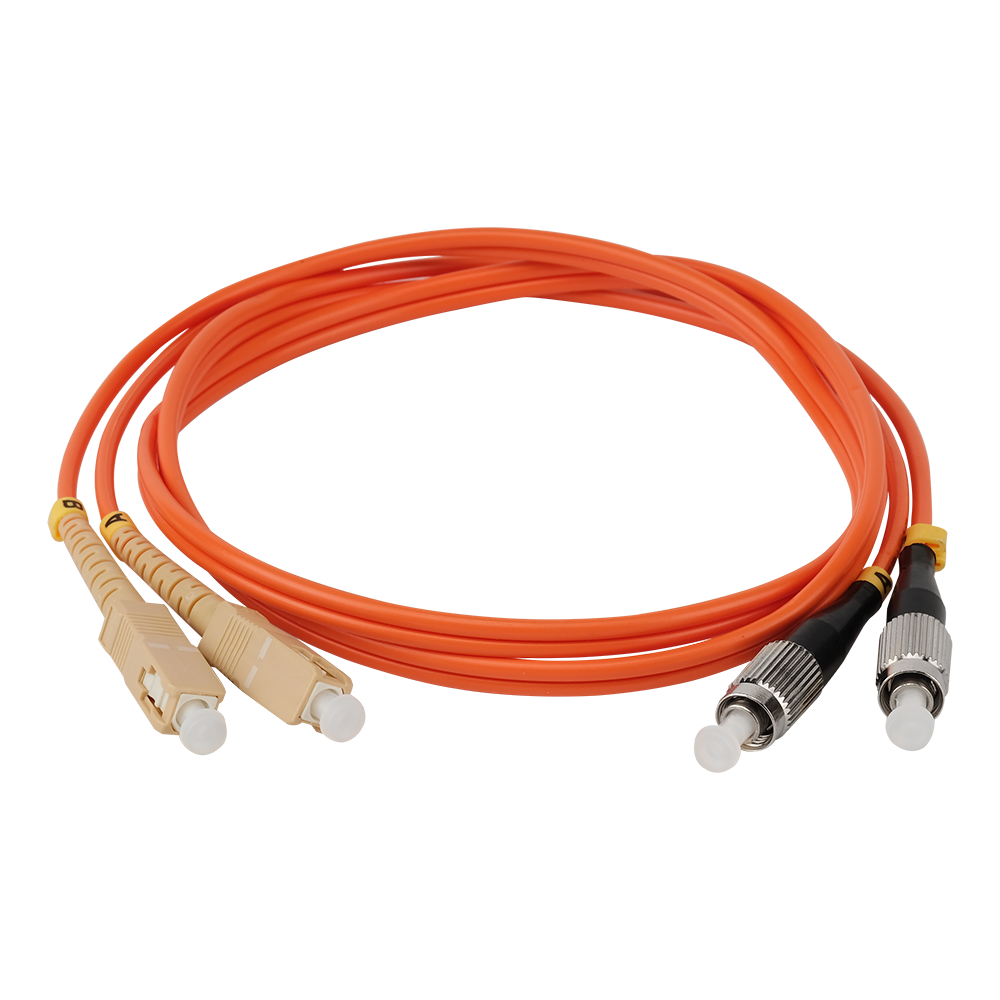
TWT-SC-FC-MM is a TWT optical patch cord (FC/PC-SC/PC) on multimode 50/125 µm (OM2) fiber, with SC (Subscriber Connector) connectors at one end and FC (Ferrule Connector) connectors at the other. It connects active network equipment together, connects equipment to an optical distribution frame and is used for patching inside the frame. The jacket is polyvinyl chloride (PVC) and the cable buffer is 3 mm. The installed connectors are numbered and each patch cord is supplied in individual packaging.
Which versions are in the series and how do I choose the length?
The series includes: duplex (OM2): 1.0, 2.0, 3.0 m. A simplex patch cord has one fiber, a duplex one has two (transmit and receive). For an equipment-to-equipment link with two fibers choose the duplex version. Choose the length with a margin for routing through organizers and reaching the ports, without tension. Other lengths are available to order.
How do I choose the multimode fiber category and can OM2, OM3 and OM4 be mixed?
The multimode patch cord uses 50/125 µm (OM2) fiber. For 10 Gbit/s and faster links the distance on OM2 is shorter than on OM3 and OM4, so choose a higher-category fiber for fast links. The distance is set by the worst section. A multimode patch cord cannot be used with single-mode equipment.
When is a patch cord with different SC (Subscriber Connector) and FC (Ferrule Connector) connectors needed?
This patch cord connects devices with different types of optical ports or adapters, for example equipment with an SC (Subscriber Connector) port and a patch panel with FC (Ferrule Connector) adapters. It avoids adapters and extra mated pairs that add loss. The connector type at each end must match the port it plugs into.
How do I keep the polarity of a duplex patch cord correct?
In a duplex link the transmitter (Tx) of one device must connect to the receiver (Rx) of the other. The connectors of the patch cord are numbered — keep the same layout at both ends of the link. If the link does not come up, swap the two connectors at one end of the patch cord or use a patch cord with reverse polarity.
How do I clean the connectors before connecting?
Inspect the connector end faces before each connection and clean them if dirty: dust and fingerprints on the end face are a common cause of loss. Suitable tools: for FC/SC connectors (2.5 mm ferrule) — LAN-FT-CL/OK2. Keep unused connectors closed with protective caps.
Where can a PVC-jacketed patch cord be used?
A polyvinyl chloride (PVC) jacket suits patching in ordinary rooms — offices, telecom cabinets and distribution frames. For rooms with higher fire-safety requirements and in data centers choose patch cords with an LSZH (low-smoke zero-halogen) jacket, for example the LANMASTER series.
How should I route and store the patch cord?
Do not kink or twist the patch cord and do not overtighten cable ties: loss increases at a small bend radius. Connect and disconnect the patch cord by the connector body, not by the cable. Store it in its individual packaging with protective caps on the connectors.